

about
inklusion connects fans to diverse comics, graphic novels and animation projects. But it’s never been about diversity for diversity’s sake.
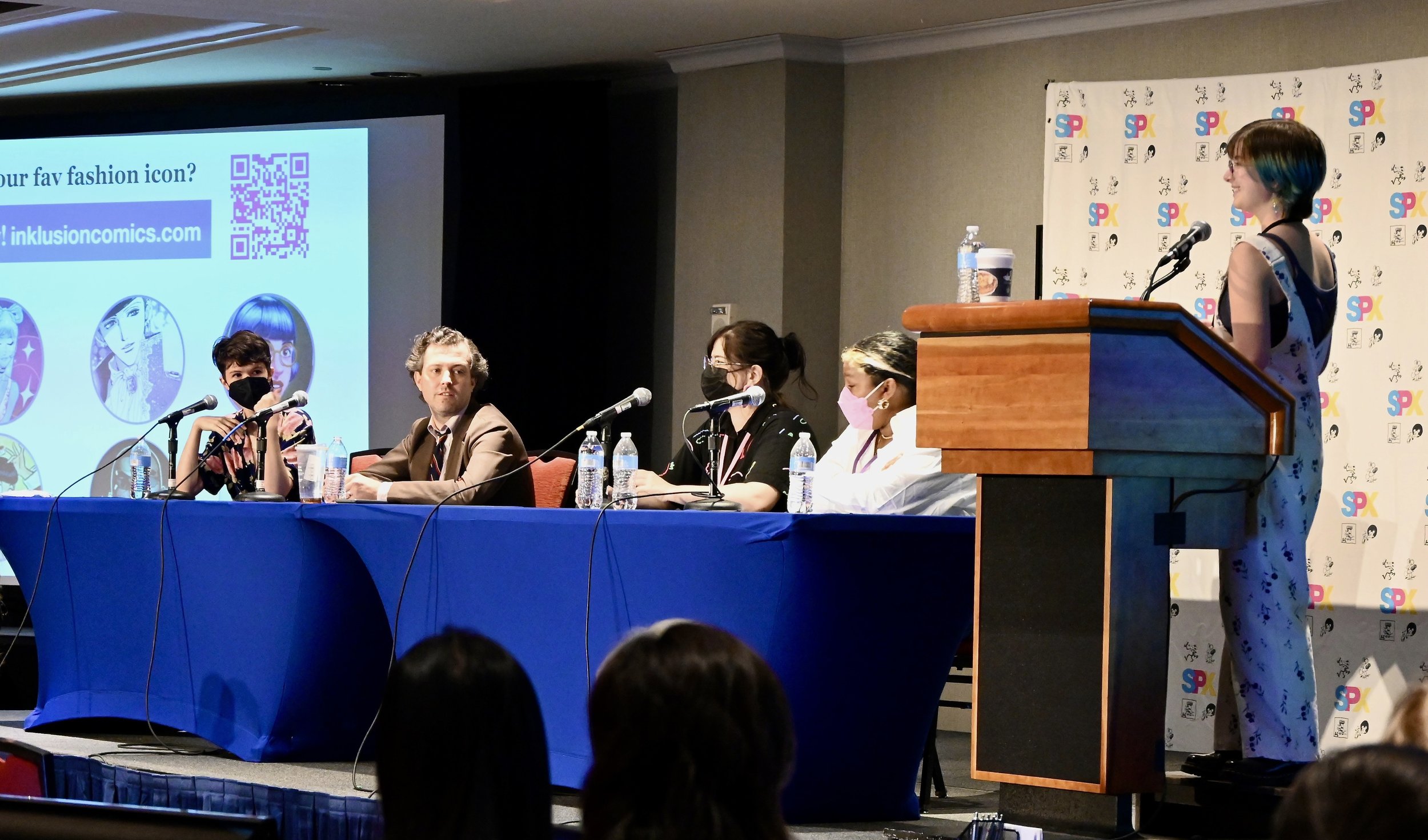
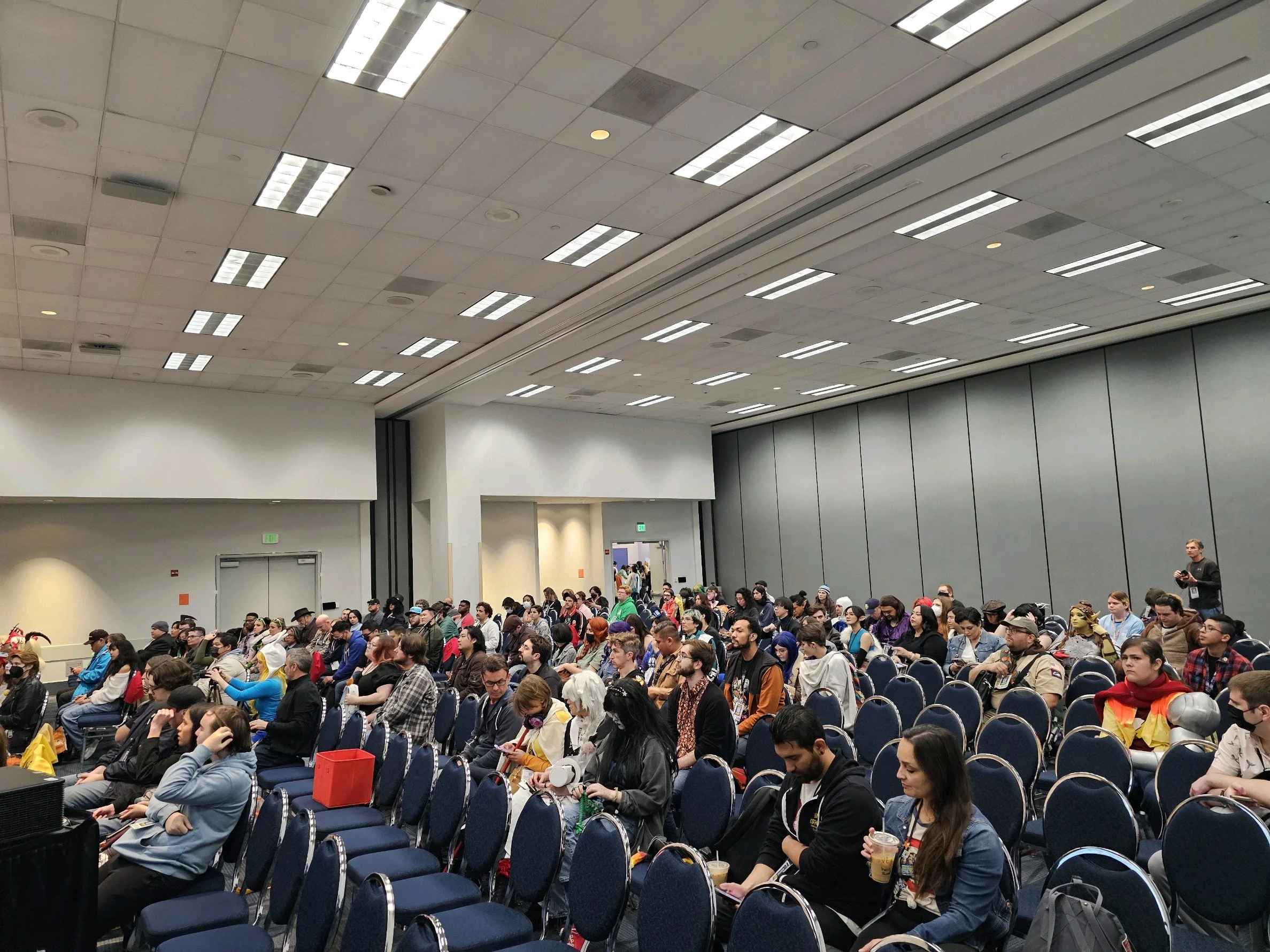
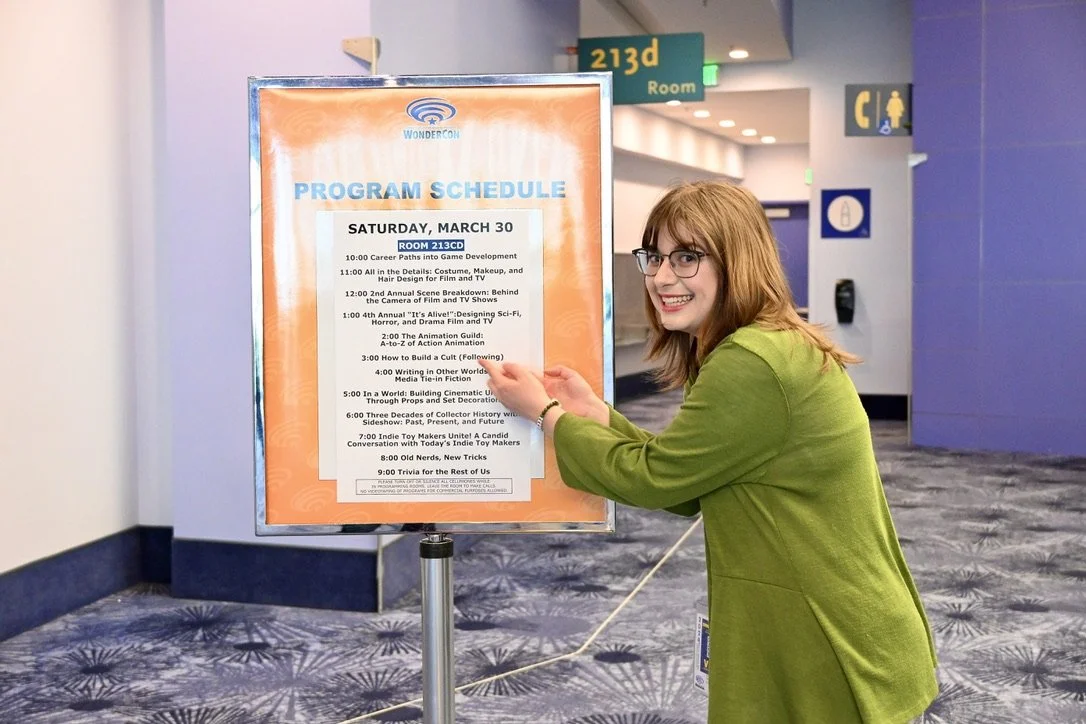
Yes, I promote diverse creators of all kinds: writers, illustrators, inkers, showrunners, voiceover actors, con experience makers and more. But I also highlight non-minority creators of diverse projects. And my programs don’t always focus on diverse topics, either. (For example, I ran an AwesomeCon panel on creating compelling side characters, an SPX panel on the role fashion plays in storytelling and a WonderCon panel on how to build a cult following.)
ink has always been about more than advancing a diversity narrative. My passion is ensuring diverse voices and stories simply get a seat at the table.
When I launched ink in 2021, I was fueled by stats like these:
According to Sim DHUGGA of Avaaz Media, as of 2018, only 7% of people working on animated TV shows are women of color.
By 2018, only 17% of animated shows were created by women.
Tracy Brown from the Los Angeles Times pointed out that while “Animated shows such as Kipo and the Age of Wonderbeasts, Craig of the Creek, Steven Universe and Avatar: The Last Airbender are among those that have been praised for the diversity of their characters...none of these shows was created by people of color.”
Since then, it feels like our industry has changed. Aren’t I seeing more diverse creators and topics on screens and in books?
Sadly, the numbers present a different reality. Take these for example:
GLAAD reported that of the 27 animated titles released in 2024 from the 10 distributors included in their study, only 15% included LGBTQ+ characters. This is a drop from 2023, when 39 titles were 21% inclusive.
54.7% of Marvel’s April 2024 titles featured male characters or all-male teams, versus 7.8% featuring female characters or teams
All this to say: We still have work to do.

why ink matters
We still need to increase awareness about the importance of diversity in entertainment.
Exposure to diverse characters teaches that there isn’t a set model of who the “ideal person” is. In Psychology Today, Dr. Segal says, “diversity can free us from the pressure to conform to a one-size-fits-all way of life.” Children, especially, need to see diversity in books. Children define themselves by the entertainment they consume, and stereotypes are often present. Tufts University authors agree that “there’s a relationship between low self-esteem and negative media portrayals of racial groups...”
We still need to increase awareness of why diverse projects are hard to find.
Comic books, graphic novels and animation have a diverse fan base and creating a world to match this community is a necessary project. Let's take women as an example.
By 1994, women were 47% of the 24mil self-identified comic fan population. But as recently as 2019, 75+% of AwesomeCon panelists were men. In 2019, NPR pointed out that “there's still a long way to go before women achieve equal representation. According to Women in Animation, 60 percent of all animation and art-school students are women, yet only 20 percent of creative jobs in the industry — producers, directors, writers, animators, and art and design jobs — are currently held by women.”
Knowing how great it feels to see myself in the entertainment I choose makes me want to work hard to ensure everyone feels represented. These stories are often about understanding differences, protecting each other and doing the right thing. Shouldn’t producers and publishers live this way in real life?
We still need to increase awareness of diversity in existing comics and animation.
Robin, Batman’s sidekick, has been two women. Spider-Man has been a woman, a pig and many more types of people (and not people :). The Guardian author Sam Thielman adds, “These are the least weird permutations the characters go through: Thor was a frog briefly.” In short: Diversity in comics and animation is happening all around us. Through the inklusion platform, I'm helping to make it even easier to find it!

history of ink
It started with comics. I'd been reading them since elementary school. But after checking out bajillions of books from the library I started to notice something: You have to actively search for diverse titles if you want to read them. They're just not that easy to find because comic bookshelves can be intimidating (especially for young readers who don't know where to begin). My method had always been to use Wikipedia to find every single book a diverse character is in, read those, and then move on to the next character.
Finding diverse animation wasn't much easier. I relied a lot on word of mouth. But there had to be an easier way to find the entertainment that I (and millions more) love. So I launched inklusion comics, LLC. To start, I used the platform for my senior-year Girl Scout Gold Award project and it was really effective!
Once my project was complete, though, I wasn't ready to abandon my mission. So here's what inklusion does today:
Creates a safe space to share about diverse comics, graphic novels + animation
Uses social media to highlight diverse titles + stories
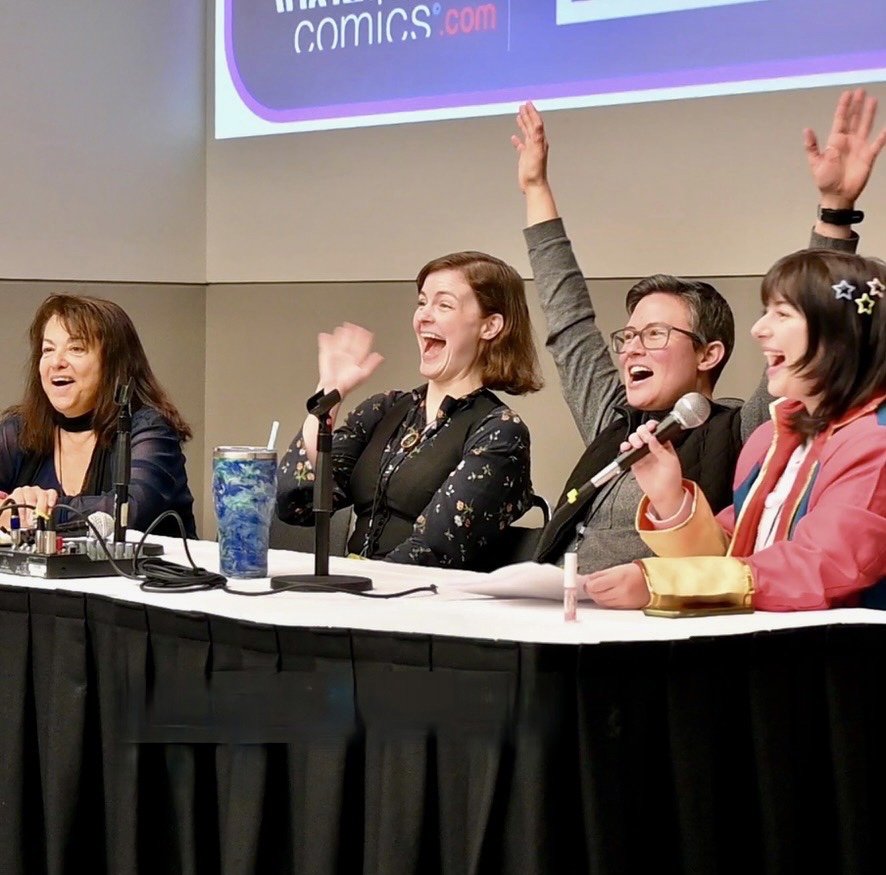
Moderates diverse panels at some of the world's biggest comic conventions, including WonderCon, AwesomeCon, Galaxy Con + Small Press Expo (SPX)
Shares news, launches + events
Continually seeks opportunities to make it easier to find diverse media/creators
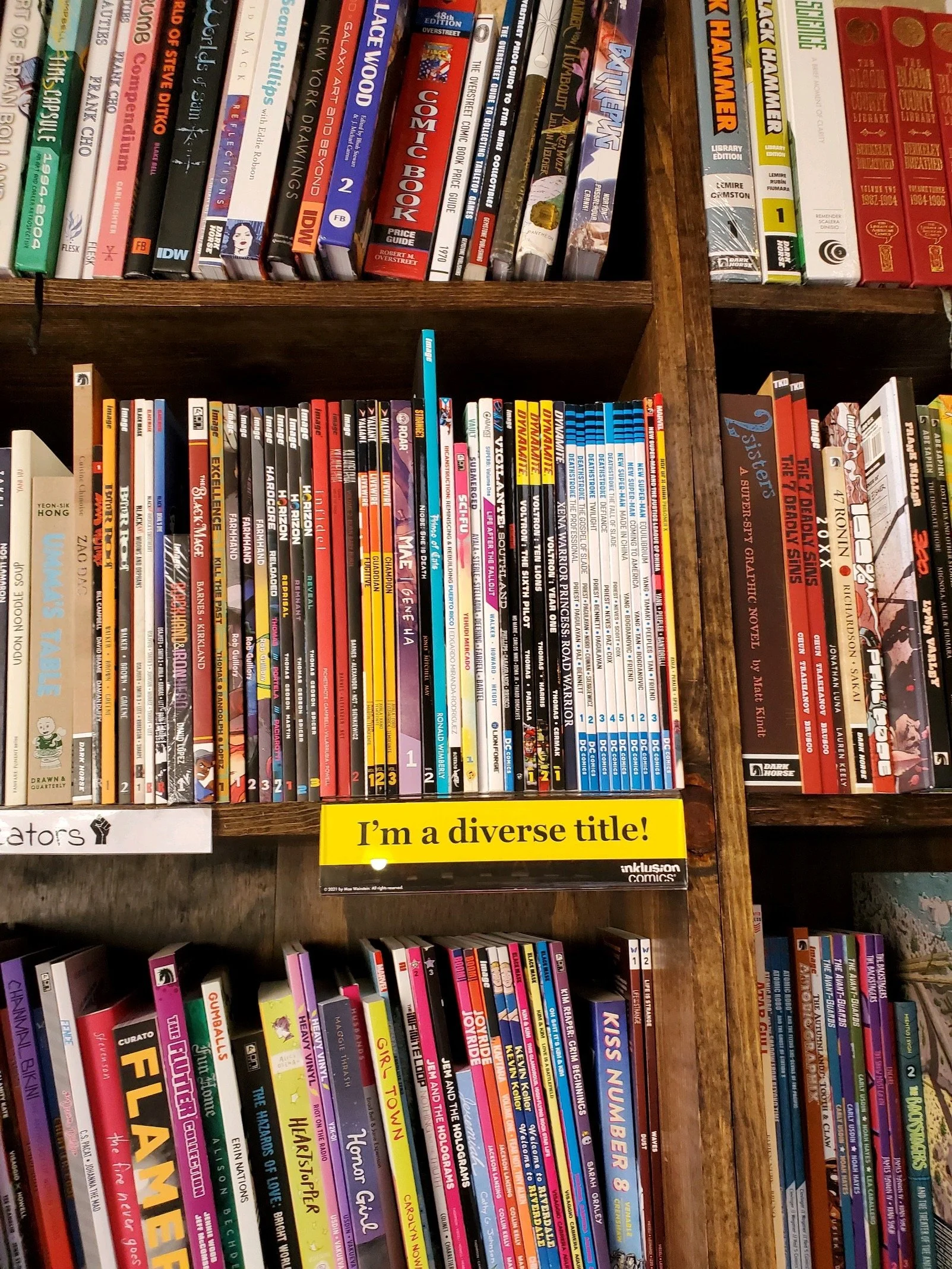
To be included on the inklusion platform, projects must meet my expert-approved Diversity Criteria List:
The main character, at least 20% of a team of lead characters OR a creator (writer, illustrator, letterist, storyboarder, actor, etc.) must be at least ONE of these:
• Any race/ethnicity other than White
• Any marginalized gender
• Any sexual identity other than straight
It is also mandatory that tropes represent diverse characters in a positive way.
Additional Considerations:
• Physical, mental and emotional
• Religion and culture
• Body Shape
• Age
If there’s a creator or project you want inklusion to highlight, contact me here!